

BPM – Business Process Management
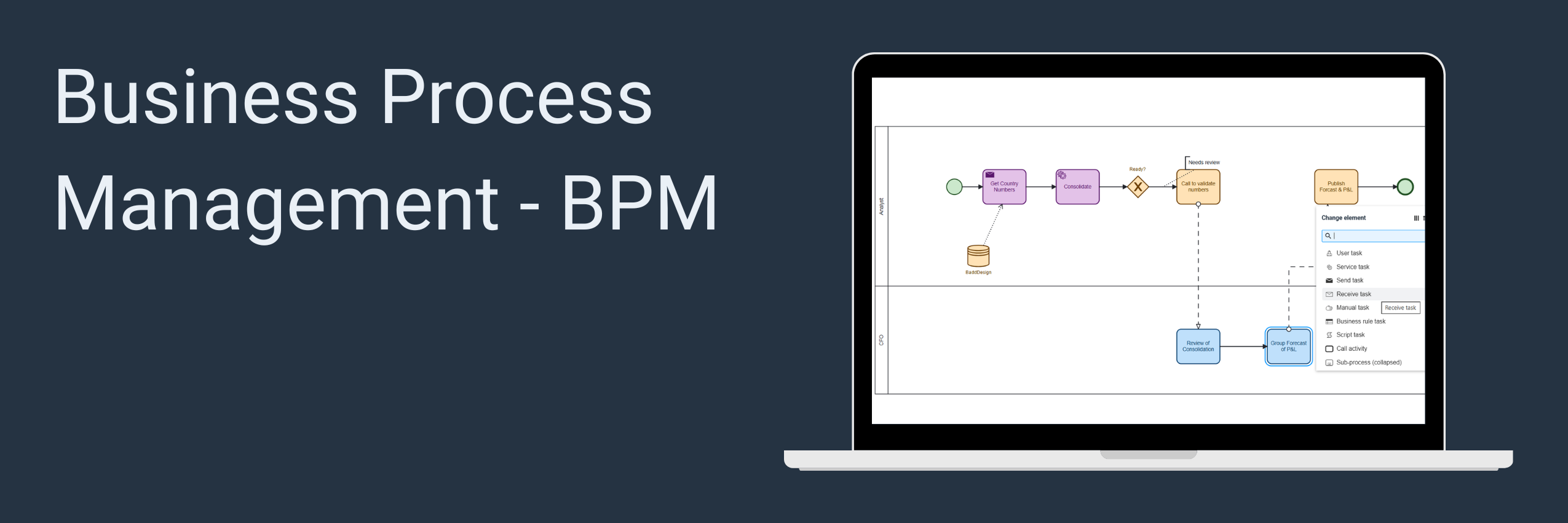
Allow colleagues to co-create and update process information and use standard BPMN 2.0 process diagrams directly within the web portal. No software installation is required. Business users, process owners and subject matter experts can collaborate online and maintain process knowledge where the work is performed.
Key Capabilities
- Process Repository: Maintain a central catalogue of processes, activities, owners, supporting applications and related documentation.
- Process Governance & Ownership: Assign ownership, accountability and responsibilities across teams and business areas. Next-Insight provides ready-made review and approval workflows that can be enabled to support governance, notifications and regular maintenance. Process diagrams support versioning, allowing future versions to be developed while the current version remains published and operational.
- SOPs, Guidelines & Documentation: Link processes directly to Standard Operating Procedures (SOPs), Policies, Guidelines, Work Instructions and external documentation, creating a single point of access for operational knowledge.
- Capability-Based Process Management: Link processes to Business Capabilities and understand which capabilities are enabled by which operational activities.
- Value Stream Alignment: Connect processes to Value Stream Stages to visualise how operational work contributes to end-to-end value creation and cross-functional collaboration.
- Compliance & Continuous Improvement: Support audits, governance, quality initiatives and continuous improvement through a structured and governed process repository.
How Next-Insight Helps
Many organisations have historically taken a fragmented approach to process management. Process knowledge is often scattered across departments, SharePoint sites, PowerPoint presentations, Visio drawings, spreadsheets, documents and the experience of individual subject matter experts. Over time, this makes it difficult to answer simple questions:
- Which processes exist?
- Which processes belong to my area?
- Who is responsible for maintaining them?
- Which guidelines and SOPs apply?
- Which version is the current version?
- How do our processes support cross-functional collaboration?
Next-Insight provides a central place for maintaining and governing business processes. Rather than storing process diagrams as disconnected files and attachments, processes become governed assets connected to ownership, capabilities, value streams and supporting documentation. Processes are not documented for documentation purposes alone. The objective is improved collaboration, compliance, governance and business performance. Many business outcomes are delivered across organisational boundaries. Connecting processes to Value Streams helps organisations understand and improve end-to-end collaboration supplementing how departments can optimise their more detailed activity-based work.
Because business processes continuously evolve, organisations need more than diagrams. They need visibility, accountability and governance to ensure that employees always have access to the latest approved process knowledge while improvement initiatives can be managed in a structured way.
Key Benefits
- Create Transparency: Gain visibility across business functions, processes, responsibilities and dependencies.
- Establish Ownership: Clearly define process owners, contributors and governance responsibilities.
- Improve Cross-Functional Collaboration: Understand how teams contribute to shared value streams and organisational outcomes.
- Support Compliance: Make policies, procedures and governance requirements visible, accessible and easier to maintain.
- Enable Continuous Improvement: Identify bottlenecks, overlaps and improvement opportunities across the organisation.
- Create a Living Process Repository: Move from static documentation to continuously maintained operational process knowledge.
How to Succeed Fast in 5 Steps
Step 1: Establish Purpose and Sponsorship:
Before documenting processes, understand why the organisation is investing in process management. Identify executive sponsors, expected outcomes and the business value that process improvements should deliver. Without a clear purpose, process work risks becoming a documentation exercise instead of a business improvement initiative.
Step 2: Define Scope and Business Context:
Identify the relevant Business Capabilities, Business Units and Value Stream Stages that define the scope of the initiative. Establish where improvements should be made and what success looks like, whether the objective is improved KPIs, fewer errors, improved customer experience, ISO compliance, reduced costs or better governance.
Step 3: Model Processes Collaboratively:
Use the built-in BPMN 2.0 capabilities to document operational processes directly in the web portal. Involve process owners, subject matter experts and operational teams to ensure that processes reflect how work is actually performed.
Step 4: Connect Processes to Operational Knowledge:
Link processes to SOPs, policies, work instructions, external documents, applications, capabilities, value streams and other relevant business context. This transforms process diagrams into governed operational knowledge that can be used across the organisation.
Step 5: Complete, Govern and Maintain:
Use process catalogues, data quality dashboards, review workflows and governance processes to ensure that the process repository is complete, maintained and continuously improved. Establish a regular review cycle to keep information current and relevant. BPMN is only in the beginning about identifying processes and drawing BPMN diagrams; Over time, the objective becomes maintaining a living repository of operational knowledge that supports governance, compliance and continuous improvement.
Related Use Cases (6 links til andre use-case sider)
- Quality Management
- Business Architecture
- Application Portfolio Management
- Governance, Risk & Compliance
- Digital Transformation
- Enterprise Governance
Connect For More
Business Process Management should be more than drawing BPMN diagrams. Next-Insight helps organisations connect processes, ownership, value streams, SOPs, governance and continuous improvement in a single platform, providing the transparency needed to improve performance and support compliance.
Book a demo to see how modern Business Process Management can become an operational governance capability rather than a documentation exercise – Get a demo