

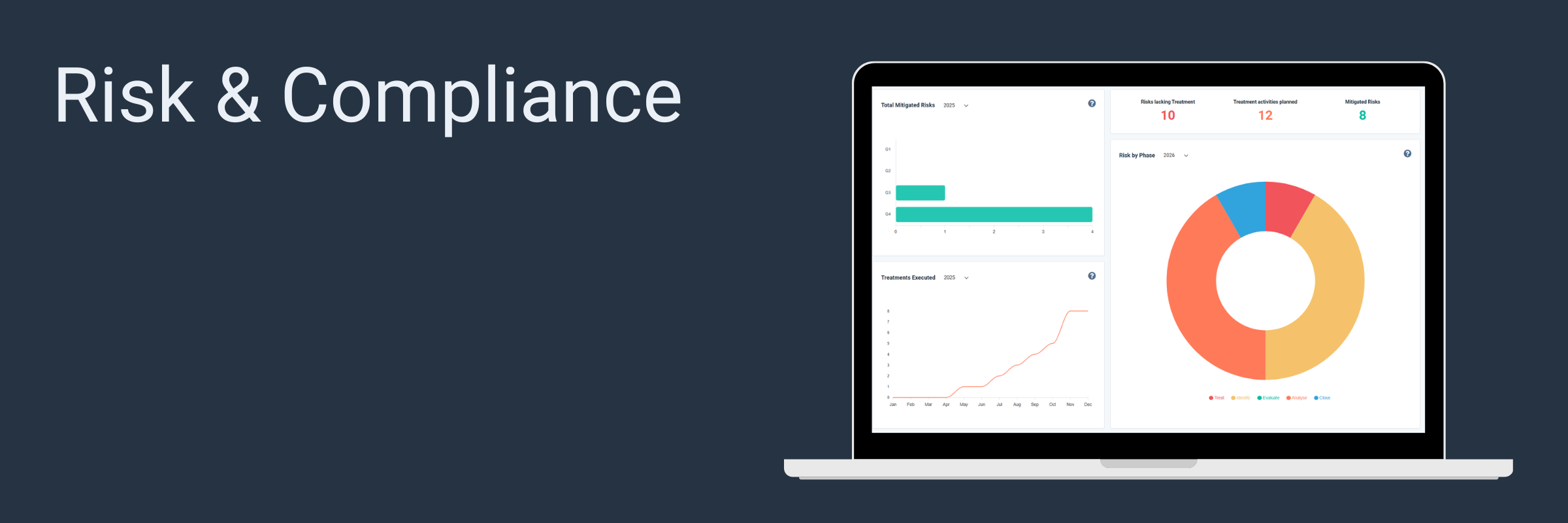
Risk & Compliance
Managing risk and meeting compliance obligations are becoming increasingly difficult across modern organisations. As regulations evolve and requirements grow, organisations often introduce separate risk registers, compliance tools and governance initiatives. Over time, this can create fragmented processes, duplicate information and unclear ownership.
Business Challenge
Risk and compliance are becoming increasingly difficult to manage across modern organisations. As regulations evolve and compliance obligations grow, organisations often introduce separate risk registers, compliance tools and governance initiatives. Over time, this can create fragmented processes, duplicate information and unclear ownership.
Risks and compliance activities are often disconnected from the business assets they are intended to protect. As a result, organisations struggle to understand which applications and business processes are exposed to significant risks, who owns specific risks and mitigations, and which regulatory requirements impact the organisation.
At the same time, compliance can become a periodic exercise based on questionnaires and manual reporting rather than an integrated part of everyday governance. The challenge is not understanding regulations. The challenge is operationalising risk and compliance across the enterprise.
Key Capabilities
- Risk Management: Identify, assess, assign and mitigate risks through structured governance processes.
- Compliance Management: Connect regulatory requirements and compliance obligations to relevant business assets.
- Enterprise Governance: Establish a consistent governance framework across business domains and assets.
- Role-Based Ownership: Assign clear responsibility for risks, controls and compliance activities.
- Delegated Review Activities: Enable responsible stakeholders to carry out risk reviews and compliance activities.
How Next-Insight Helps
Next-Insight takes a Governance-First approach to Risk and Compliance Management. Instead of managing risks in isolated spreadsheets or standalone tools, organisations can connect risks directly to the business assets they impact, including applications, business processes, information, technologies and organisational units.
The platform supports structured risk assessment workflows aligned with recognised risk management practices such as ISO 31000. Risks can be identified, assessed, assigned, reviewed and mitigated through a controlled governance process.
By connecting risks directly to applications, processes, information and organisational ownership, organisations gain visibility into both the source of risk and its potential business impact. Every risk can be linked to responsible stakeholders, creating clear accountability for monitoring and remediation activities.
Because ownership already exists across applications, information, business processes and other enterprise assets, organisations can naturally extend their governance model to include risk and compliance activities.
This creates a practical and business-oriented approach where risk management becomes part of daily operations rather than a separate compliance exercise.
As regulatory requirements evolve, organisations can use the same governance framework to support new compliance initiatives without introducing additional disconnected tools.
The result is greater transparency, stronger accountability and more sustainable risk and compliance management across the enterprise.
Key Benefits
- Establish Clear Ownership: Ensure responsibility for risks, controls and compliance activities is clearly assigned.
- Improve Audit Readiness: Maintain connected and traceable information to support audits and compliance reviews.
- Strengthen Accountability: Make responsibilities and ownership visible across the organisation.
- Reduce Siloed Information: Reduce dependency on spreadsheets and disconnected risk and compliance tools.
- Improve Risk Transparency: Connect risks directly to the applications, processes, information and other business assets they impact.
- Support Regulatory Compliance: Create a governance framework that can adapt as regulatory requirements evolve.
- Enable Delegated Reviews: Distribute risk and compliance activities to the people responsible for managing them.
- Connect Risk to Business: Understand how risks affect business assets, operations and organisational responsibilities.
How to Succeed Fast in Six Steps
Successful Risk and Compliance initiatives should not start with another disconnected tool or a large compliance exercise. The most effective approach is to build on an existing governance foundation and gradually connect risks, requirements and responsibilities to the business assets they impact. The following six-step approach will help you operationalise Risk and Compliance Management.
1. Establish a Governance Foundation
Start by defining ownership across key business assets, including applications, processes, information and organisational responsibilities. Next-Insight provides these governance capabilities out of the box, creating a strong foundation for risk and compliance management.
2. Identify Critical Assets
Focus initially on the most important applications, business processes and information assets that support critical business operations. This allows risk and compliance activities to be prioritised around the areas that matter most.
3. Define Risks and Compliance Requirements
Identify the key risks, regulatory requirements and compliance obligations that impact these business assets. Connecting these requirements to the relevant assets creates transparency and traceability across the organisation.
4. Assign Ownership
Assign clear accountability for risks, controls and compliance activities. Make responsibilities visible across the organisation so that everyone understands who is responsible for monitoring, reviewing and mitigating risks.
5. Activate Reviews and Workflows
Implement structured risk reviews, control assessments and compliance workflows. Delegating review activities and establishing regular monitoring makes risk and compliance part of normal governance rather than a periodic exercise.
6. Expand Across the Enterprise
Gradually extend risk and compliance management to additional domains, assets and business areas. This creates a sustainable and scalable governance model that grows naturally with organisational maturity.
Connect For More
Risk and Compliance Management should be more than spreadsheets, questionnaires and isolated GRC tools. Next-Insight helps organisations connect risks, controls, compliance requirements and business assets within a single governance platform.
The result is stronger accountability, improved audit readiness and a more sustainable approach to risk and compliance management.
Book a demo today and discover how Next-Insight helps organisations operationalise Risk & Compliance through governance, ownership and transparency – Get a demo