

QLM – Quality Management
Maintaining quality across a modern organisation is becoming increasingly difficult. Many organisations struggle with different collaboration tools and multitude of perspectives and may not see the full value of an overall quality management solution.
Policies, procedures, controls, risks, compliance requirements and operational processes are often managed in separate tools. As a result, organisations struggle to understand ownership, demonstrate compliance, maintain consistency and identify where improvement efforts should be prioritised.
At the same time, leaders need visibility into how value is created across the organisation, while operational teams need clear guidance on how work should be performed. The challenge is no longer documenting quality. The challenge is governing quality across the enterprise.
At the same time, leadership requires visibility into how value is delivered across the enterprise, while operational teams need clear guidance on how work should be performed. The challenge is no longer documenting quality, it is governing quality and continuous improvement across the siloes.
Key Capabilities
- Value Stream Management
- Business Process Management (BPMN)
- Standard Operating Procedures (SOPs)
- Governance and Approval Workflows
- Risk and Compliance Management
How Next-Insight Helps
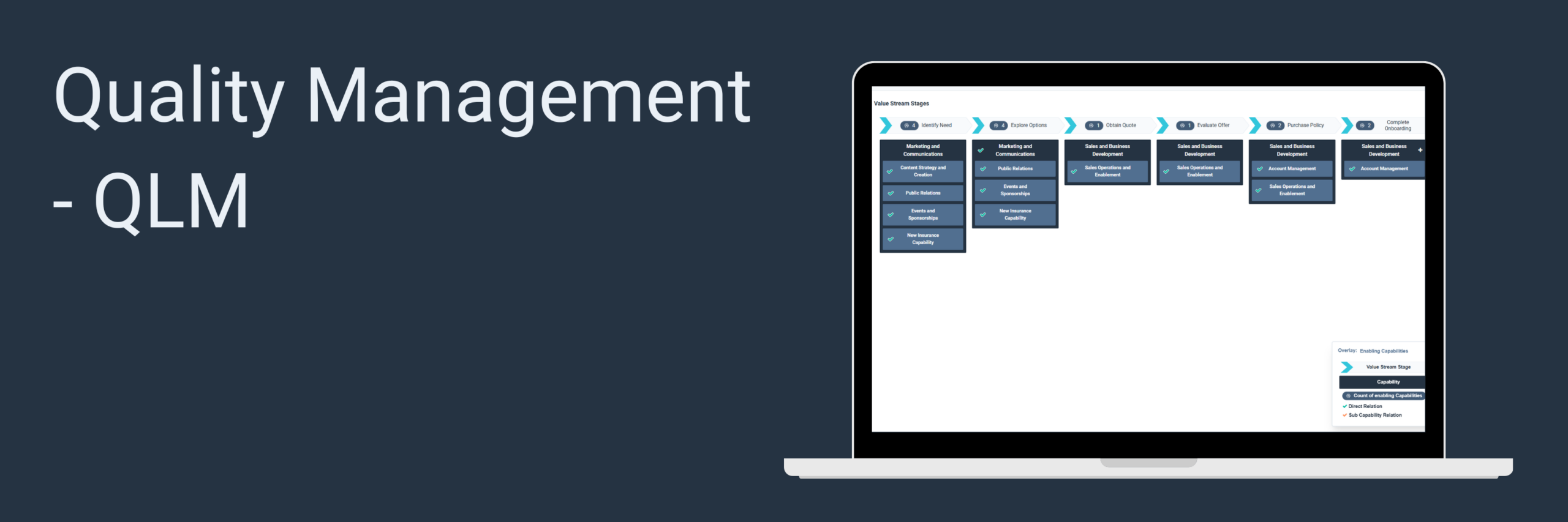
Next-Insight enables organisations to manage quality as an integrated solution. The web solution connects value streams, business processes, policies, procedures, controls, risks, organisational ownership and supporting applications within a single governance repository.
By combining strategic and operational perspectives, organisations gain visibility into how value is delivered, which processes support that value creation, and where quality requirements must be embedded.
Value streams provide the management perspective needed to understand how work flows across organisational boundaries, while business processes provide the operational detail required to manage execution and compliance.
Quality requirements, SOPs, guidelines and governance artefacts can then be connected directly to the processes and value streams they support, creating complete traceability from strategic objectives to operational execution.
This allows organisations to establish governance, assign ownership, support audits and continuously improve quality without creating a disconnected documentation exercise.
Key Benefits
- Establish a single source of truth for quality management
- Improve governance and accountability
- Strengthen audit readiness and compliance
- Increase transparency across organisational silos
- Connect strategy and operational execution
- Improve collaboration across departments
- Enable informed decision-making through connected governance data
How to Succeed Fast in six steps
Successful quality management initiatives rarely start by documenting every process. The most successful organisations begin by understanding how value is created and then focus on the areas that matter most. The following six-steps approach will help you to mature your Quality Management.
1. Map Value Streams and Business Domains
Start by identifying the organisation’s most important value streams and business domains. This creates an enterprise-wide understanding of how value flows across departments and organisational boundaries. The goal is not to capture everything. The goal is to identify where quality, governance and business outcomes matter most.
2. Identify Critical Processes
Once the value streams are understood, focus on the business processes that are critical for achieving operational excellence, regulatory compliance or transformation objectives. Avoid documenting every process from the beginning. Focus on the key critical processes first.
3. Establish Connectivity
Connect processes to capabilities, policies, SOPs, guidelines, requirements and other governance artefacts. This creates transparency and traceability across the organisation while ensuring quality requirements are embedded into daily operations.
4. Establish Governance and Ownership
Assign ownership for value streams, processes, controls and quality requirements. Define review cycles, approval workflows and accountability structures. This is where organisations start gaining real governance and visibility.
5. Expand and Improve
Gradually enrich the repository with additional processes, controls, risks, compliance requirements and improvement opportunities. As governance maturity increases, the organisation develops a more complete picture of how quality and performance interact.
6. Connect Applications and Information
Once the operating model is established, connect business processes to applications, integrations and information assets. This provides visibility into how technology supports business execution and enables stronger governance, transformation planning and impact analysis.
Related Use Cases
- Business Process Management
- Business Capabilities
- Risk Management
- Governance Management
- Compliance Management
- Application Portfolio Management
Connect For More
Quality Management should be more than document control. Next-Insight helps organisations connect value streams, processes, governance, quality requirements, risks and technology in a single platform, providing the transparency needed to continuously improve performance and ensure compliance.
Book a demo to see how modern Quality Management can become a strategic management capability rather than a documentation exercise – Get a demo